Trying to decide between a freehold, condo, or townhouse in Mississauga? You’re not alone. With so many neighborhoods and building types, it can be hard to know which option fits your lifestyle, budget, and long-term plans. In this guide, you’ll learn how each ownership type works, what you’ll maintain and pay monthly, how lenders view them, and what affects resale in Mississauga. Let’s dive in.
What each property type means
Mississauga offers all three options in different settings. Knowing how ownership works helps you avoid surprises later.
Freehold (fee simple)
You own the land and the building. You handle all maintenance inside and out, from the roof to the yard. In Mississauga, you’ll see many freehold detached homes and freehold townhouses across suburban areas like Meadowvale.
Condominium (condo)
You own a unit and share ownership of common elements like halls, roofs, and amenities. A condo corporation, governed under Ontario’s Condominium Act, manages the property, collects fees, and enforces bylaws. Mississauga’s City Centre near Square One is primarily high-rise condos with transit access and amenities.
For background on governance, review the Ontario Condominium Act through the Government of Ontario and consumer guidance from the Condominium Authority of Ontario. You can read the Act itself on the Government of Ontario site.
Townhouse (form vs title)
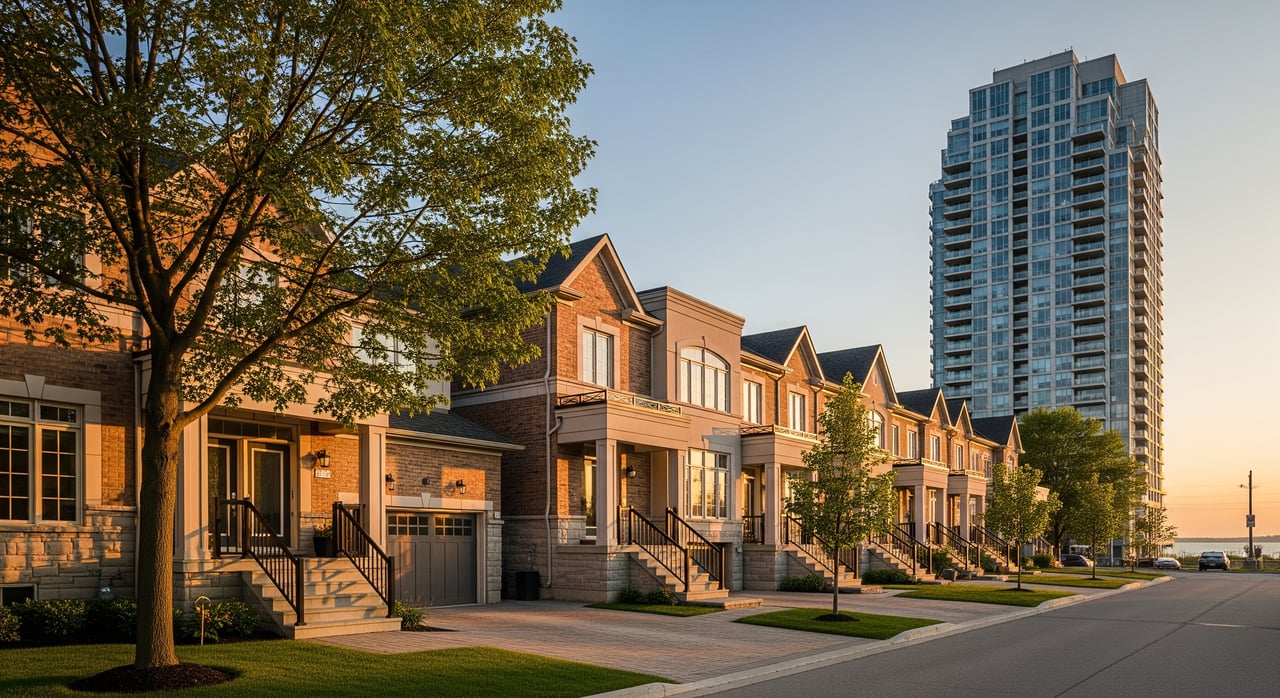
A townhouse can be freehold or condo-titled. The building style alone doesn’t tell you how it’s governed or what you maintain. Port Credit, for example, mixes stacked, condo-titled townhomes and freehold townhouses near the waterfront. Always confirm whether a townhouse is freehold or part of a condominium corporation.
Where these homes cluster in Mississauga
- City Centre: High-rise condos, amenity-rich buildings, strong transit access and urban convenience.
- Port Credit: Mix of stacked, condo-titled, and freehold townhomes oriented to the waterfront lifestyle.
- Meadowvale and suburban nodes: Larger supply of freehold detached and freehold townhouses with yards and private garages.
You can explore local planning context and growth areas through the City of Mississauga.
What you own and maintain
Understanding responsibilities helps you budget with confidence.
Freehold responsibilities
- You maintain the exterior and interior: roof, siding, windows, driveway, fences, and yard.
- You pay utilities directly, plus home insurance and property taxes.
- If there are shared items (like a private lane), a separate agreement or easement will define obligations.
Condo responsibilities
- The condo corporation maintains and insures common elements, hires management, handles security and amenity operations, and pays common-area utilities.
- You maintain the interior of your unit and any exclusive-use areas as defined in the declaration.
- You pay monthly condo fees and your own unit insurance for contents, improvements, deductibles, and liability.
For consumer explanations of status certificates, reserve funds, and bylaws, use the Condominium Authority of Ontario. The status certificate outlines finances, bylaws, reserve fund details, and any ongoing legal matters you should know before you buy.
Townhouse responsibilities
- Freehold townhouse: Similar to a detached freehold with usually smaller exterior areas to maintain.
- Condo-titled townhouse: You pay condo fees that cover common elements. Fees are often lower than high-rise condos if amenities are limited, but confirm by reviewing the status certificate.
Condo fees: what they include and why they vary
Condo fees typically bundle building insurance, common-area utilities, management, cleaning, landscaping, snow removal, reserve fund contributions, and amenity operations. Fees vary based on:
- Building age and condition. Older buildings may need higher reserve contributions.
- Amenities. Pools, gyms, and concierges add costs but can be a selling point.
- Utilities included. If heat or water is included, fees may be higher.
- Management model and staffing.
Before you buy, review the status certificate, reserve fund study, and recent financials to spot potential fee increases or special assessments.
Monthly carrying costs: predictability vs control
- Freehold: Your monthly costs are mortgage, property tax, insurance, utilities, and variable maintenance. You control the timing of major projects but also bear cost volatility, like a roof replacement.
- Condo: Condo fees are a predictable monthly line item that can include some utilities and shared expenses. Fees can rise if reserve funds are low or major repairs are needed.
- Townhouse: Freehold townhouses lean like freeholds, often with smaller exterior maintenance. Condo-titled townhouses lean like condos, with fees that can be lower if there are fewer amenities.
Financing and lender considerations
Lenders look at both you and the property. Condos have project-level reviews. Lenders and insurers may consider owner-occupancy levels, reserve fund health, and any litigation when underwriting.
- If you plan to use an insured mortgage, the Canada Mortgage and Housing Corporation provides condo and mortgage guidance that influences lender policies.
- Buildings with significant deficiencies or active lawsuits may face stricter review, which can affect financing timelines and terms.
Due diligence checklists
Set yourself up for a smooth purchase by gathering the right documents early.
For condo buyers
- Get the current status certificate. Review financial statements, reserve fund position, budget, bylaws, and meeting minutes for any special assessments or major projects.
- Confirm parking and locker details. Check whether they are deeded or assigned.
- Verify what utilities and insurance are included in the fees.
- Review rules on pets, rentals, and renovations to ensure they match your plans.
The Condominium Authority of Ontario offers consumer-friendly primers on each of these topics.
For freehold buyers
- Order a home inspection to assess roof, structure, electrical, plumbing, and HVAC.
- Complete a title search to identify easements, shared driveways, or restrictive covenants.
- Estimate near-term capital needs like roof age, window replacement, or furnace lifespan.
- Check municipal bylaws and permits for any past renovations using the City of Mississauga.
Resale dynamics in Mississauga
Your exit strategy matters. Think about who will buy from you next and what drives value in each area.
Liquidity and buyer pools
- Freehold detached: Broad buyer pool and strong appeal for those wanting land and yard space, especially in suburban nodes.
- Condos in City Centre: Large buyer pool including first-time buyers, downsizers, and investors. High supply in some corridors can shape pricing.
- Townhouses: A middle ground with private entries and more space than condos at a lower price than many detached homes.
For broader GTA context and trends, monitor the Toronto Regional Real Estate Board and the Canadian Real Estate Association.
What drives value
- Land and scarcity: In many Canadian markets, freehold homes have historically captured land-value growth more strongly due to limited supply.
- Location fit: City Centre benefits from transit and major amenities, which supports condo demand. Port Credit’s waterfront and village character often sustain strong appeal for townhomes and low-rise. Meadowvale’s larger lots and suburban feel attract buyers seeking space.
- Age and condition: Older condo buildings can face major capital projects. Underfunded reserves may lead to special assessments that affect short-term resale.
- Parking and storage: Deeded parking and locker ownership can support resale in dense areas. Buildings with limited parking may see narrower buyer interest.
- Amenities and fees: Amenities can attract some buyers but raise monthly fees for others. Match the amenity mix to your target buyer when you sell.
Special assessments and reserve funds
Condo corporations with underfunded reserves or major repair needs may levy special assessments on unit owners. This can impact near-term resale and carrying costs. Freehold owners can face similar big-ticket items, but you control timing and scope since it’s your property alone.
Which option fits your lifestyle and budget?
Use these questions to narrow your focus before touring homes.
- Lifestyle and maintenance
- Do you prefer lock-and-leave living with exterior work handled for you? Consider a condo.
- Do you want a private yard, garage, and maximum control over renovations? Consider freehold.
- Do you want a private entrance with some shared maintenance? Consider a townhouse and verify the title type.
- Budget
- Are you comfortable with a monthly condo fee for predictable services? Or would you rather manage variable maintenance on a freehold?
- Can you absorb unexpected expenses like a roof or furnace in a freehold? If not, a condo’s predictability could help.
- Commute and neighborhood feel
- Do you value urban convenience and transit near City Centre, a waterfront lifestyle in Port Credit, or more space in Meadowvale?
- Time horizon
- Shorter holding periods may align with condos in dense rental markets. Longer holds may favour freeholds for land appreciation potential.
Sample matches in Mississauga
- City Centre condo: If you value transit, amenities, and minimal exterior maintenance, a high-rise near Square One can be a strong fit.
- Port Credit townhome: For a townhome lifestyle near the waterfront, confirm if it’s freehold or condo-titled. Fee structures and responsibilities differ.
- Meadowvale freehold: If you want a yard and more control without condo rules, focus on freehold detached or townhouses.
Your next steps
If you’re early in the process, start by clarifying must-haves, monthly budget comfort, and preferred neighborhoods. Then line up your due diligence plan so you can act quickly when the right home hits the market. When you’re ready for tailored guidance, market insight, and disciplined negotiation, connect with Nancy Hate for a clear plan forward.
FAQs
What is the core difference between freehold and condo ownership?
- In a freehold, you own the land and building and maintain everything yourself. In a condo, you own your unit and share common elements that are managed by a condo corporation under Ontario’s Condominium Act.
How do condo fees in Mississauga buildings typically get used?
- Fees fund common element maintenance, building insurance, common utilities, management, reserve fund contributions, and any amenities. Review the status certificate and budget to see the exact breakdown.
What should I review before buying a Mississauga condo?
- Obtain the status certificate, reserve fund study, financial statements, meeting minutes, and rules on parking, lockers, rentals, pets, and renovations. The Condominium Authority of Ontario provides helpful guidance.
Are townhouses always condos in Mississauga?
- No. Townhouses can be freehold or condo-titled. The term “townhouse” describes the form, not the legal title. Confirm the title type to understand costs and responsibilities.
How do lenders view condos compared to freeholds?
- Lenders may review the condo project’s financial health, reserve fund, and legal status in addition to your application. For insured mortgages, see guidance from the Canada Mortgage and Housing Corporation.