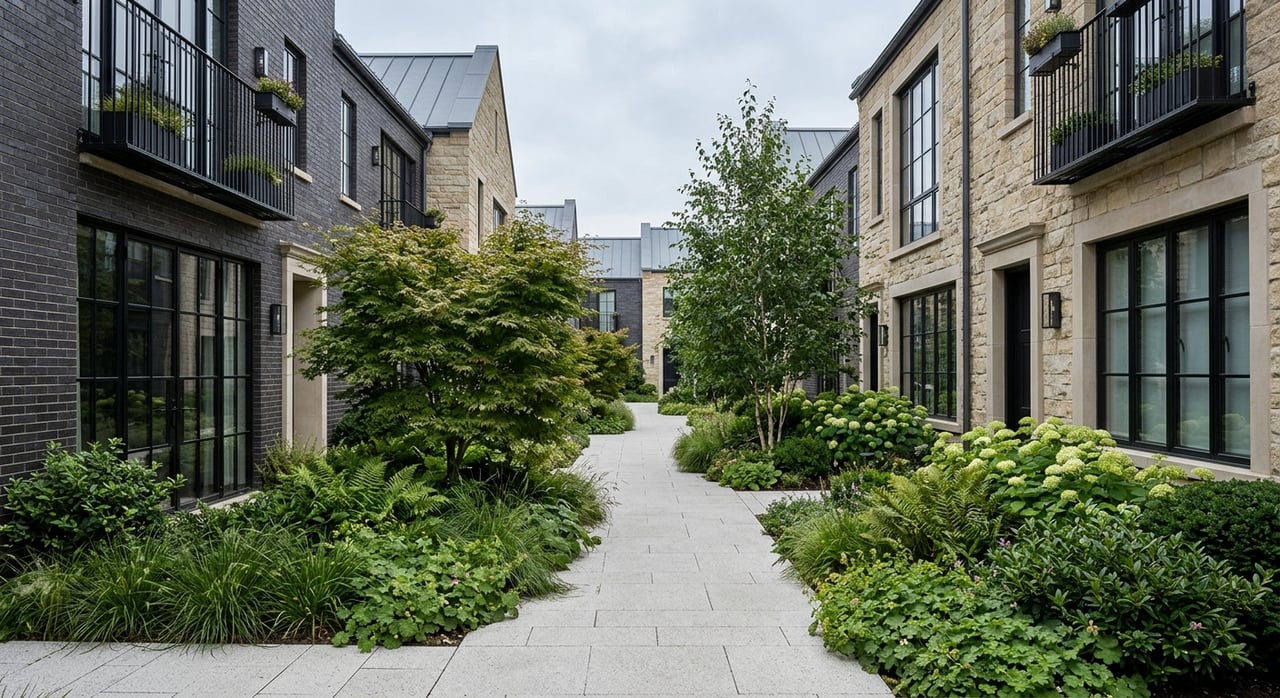
What makes a GTA neighbourhood truly work for you? It is rarely the restaurant that everyone posts about or the ranking that keeps showing up in your feed. If you want to buy with confidence, you need to look past the hype and focus on how a neighbourhood supports your real daily life, both now and in the years ahead. Let’s dive in.
Why hype can mislead you
A popular neighbourhood is not always the right neighbourhood for your lifestyle, commute, or long-term plans. In the GTA, the better test is how a place functions day to day and how it is expected to evolve over time.
That approach lines up with local planning policy. Toronto’s Official Plan prioritizes complete communities with access to housing, transit, jobs, education, healthcare, nature, and local amenities. Mississauga and Brampton also frame their official plans as road maps for land use, development, infrastructure, and services.
Start with daily convenience
The first question is simple: can you live your life here without adding friction to every day? A neighbourhood may look exciting online, but if basic errands, services, and routines are inconvenient, that excitement can fade quickly.
Toronto Public Health’s walkability index measures residential density, intersection density, land-use mix, and retail ratio. That matters because it shifts your attention away from a few headline amenities and toward whether the area is actually set up for everyday use.
What to check on the ground
When you visit a neighbourhood, focus on practical patterns instead of one standout feature. You want to understand how easily the area supports your normal week.
Look at:
- Grocery and everyday retail access
- Parks, trails, and open space
- Libraries, recreation centres, and community services
- Sidewalks, crossings, and street design
- How much can realistically be done on foot
Toronto’s Wellbeing Toronto tool can help map neighbourhood data. In Peel, the Community Services Map is useful for locating hospitals, libraries, recreation centres, child care, housing assistance, and other public services.
Amenities matter, but timing matters too
A planned park or community centre can sound reassuring, but planned does not always mean immediate. Mississauga notes that amenities may be secured early in development and built later, so it is important to separate what exists today from what may arrive in the future.
That distinction can shape your experience more than buyers expect. If you need certain services right away, current access should carry more weight than a future brochure promise.
Test the real commute
A neighbourhood can look close on a map and still feel far away in practice. In the GTA, commute reality often depends more on route options, transfer points, and peak-hour conditions than straight-line distance.
According to Statistics Canada, in 2021, 73.8% of workers in the Toronto CMA who lived and worked in the region used a car, truck, or van. Average commute times were 25.5 minutes by car, 47.6 minutes by public transit, and 15.6 minutes by walking or cycling, with an overall average of 29.8 minutes.
Why mobility options change the equation
If you work outside your neighbourhood, flexibility matters. A location with multiple ways to move around can give you more resilience when schedules change or congestion builds.
Regional improvements may help over time. GO Expansion is intended to support faster and easier travel across the region through expanded routes, new stations, and 15-minute, two-way all-day GO service on parts of the network. Toronto’s 2025-2027 Cycling Network Plan also commits to 100 km of new and major upgrade bikeways and 40 km of renew projects.
What buyers should do before deciding
Before you commit to a neighbourhood, test the trip at the times you would actually travel. Morning and evening peak periods can tell a very different story than an off-hour drive or a map app estimate.
Statistics Canada also notes that cross-boundary commutes into Toronto from nearby CMAs can exceed an hour, especially by transit. That is why a realistic commute test is one of the most valuable steps in your search.
Read the planning context
If you want to understand where a neighbourhood is heading, start with planning documents. Official plans and secondary plans often reveal more than listing descriptions or social media chatter ever will.
Toronto’s official plan maps show land use, higher-order transit corridors, secondary plans, and site-specific policies. Secondary plans go further by outlining more detailed local policy for specific areas.
What planning documents can tell you
These documents can help you spot major shifts before they fully materialize in the market. That can be useful whether you are looking for stability, future growth, or a better fit for your lifestyle.
Planning context may show:
- Areas targeted for growth
- Transit corridors and mobility upgrades
- Future mixed-use development patterns
- Infrastructure priorities
- Where density may increase over time
Mississauga’s planning framework directs growth into strategic areas so existing infrastructure can support more people. Brampton also states that its official plan guides housing, shops, and the infrastructure needed to support growth.
Approval is not the same as delivery
This is one of the most important points for buyers in the GTA. A neighbourhood may have ambitious plans, but the pace of visible change can vary.
Mississauga’s growth forecast points to 995,000 people, 343,500 households, 589,990 jobs, and a 120,000-unit housing target by 2051/2034, according to its guiding city growth materials. That gives useful context, but it does not mean every improvement appears on the same timeline.
There is also an administrative detail worth noting in Peel. Planning responsibilities for Brampton’s boundaries transferred to the city on July 1, 2024, so current local authority matters when reviewing planning information.
Compare housing stock and feel
A neighbourhood’s housing mix often tells you a lot about how it lives day to day. The built form affects density, street rhythm, parking patterns, noise levels, and the overall pace of the area.
According to 2021 census profiles from Statistics Canada, single-detached homes made up 23.3% of Toronto’s housing stock, compared with 37.1% in Mississauga, 52.6% in Brampton, and 58.6% in Oakville. Oakville also had 17.0% row houses and 12.2% apartments in buildings with five or more storeys.
Why housing mix matters to you
Those numbers help explain why some parts of the GTA feel more compact and urban while others feel more suburban. Neither is inherently better. The key is understanding which environment fits your routines, budget, and goals.
If you want easier walkability and a denser street network, one type of housing pattern may suit you better. If you want a different built form or more space, another area may align more closely with what you value.
Watch supply and construction trends
You should also understand whether a neighbourhood is likely to see significant new supply or prolonged construction activity. That can affect inventory, noise, traffic patterns, and your experience in the short to medium term.
CMHC’s GTA housing market tables track starts, completions, units under construction, absorbed units, and unabsorbed inventory. This is a helpful way to move beyond assumptions and assess whether change is already underway.
A simple framework to use
If you want a smarter way to evaluate any GTA neighbourhood, compare it across four layers. This keeps your search grounded in facts instead of marketing language.
The four layers to compare
- Daily convenience: Can you handle normal errands and routines with ease?
- Commute realism: What does the trip feel like during actual peak hours?
- Planning trajectory: What is likely to change in the area over time?
- Housing form: Does the built environment match the lifestyle you want?
Public data can help you answer each of these questions. Still, numbers alone do not tell you how a street feels, how quickly change may happen, or how one pocket compares with another nearby.
That is where local interpretation becomes valuable. If you want help weighing neighbourhood trade-offs across Oakville, Mississauga, Toronto, or the broader GTA, Nancy Hate can help you connect planning context, market data, and real-world livability so you can make a more confident move.
FAQs
How can you evaluate a GTA neighbourhood beyond online hype?
- Focus on four core factors: daily convenience, commute realism, planning context, and housing stock. Public data and in-person visits usually give a clearer picture than rankings or social media buzz.
Why does walkability matter when choosing a GTA neighbourhood?
- Walkability helps show whether a neighbourhood supports daily errands and routines, not just occasional outings. It is a practical way to judge convenience and day-to-day livability.
What should you check about a GTA commute before buying?
- Test the route during the times you would actually travel and compare your mobility options. Distance alone does not reflect real peak-hour conditions or cross-boundary travel times.
How do official plans help you understand a GTA neighbourhood?
- Official plans and secondary plans can show where growth, transit, land use changes, and infrastructure improvements are expected. They help you understand the likely future shape of an area.
Why does housing mix matter in GTA neighbourhood research?
- Housing mix affects how dense, quiet, active, or suburban a neighbourhood may feel. It is one of the clearest clues to the character and rhythm of day-to-day life.