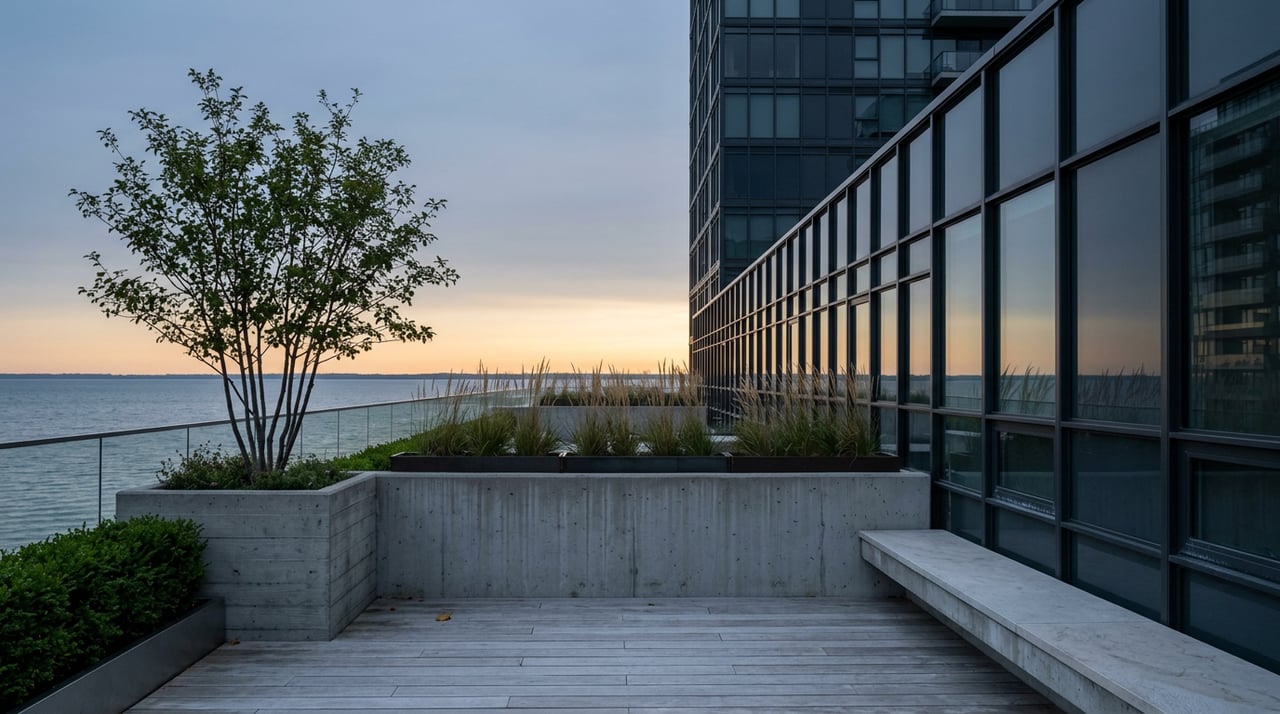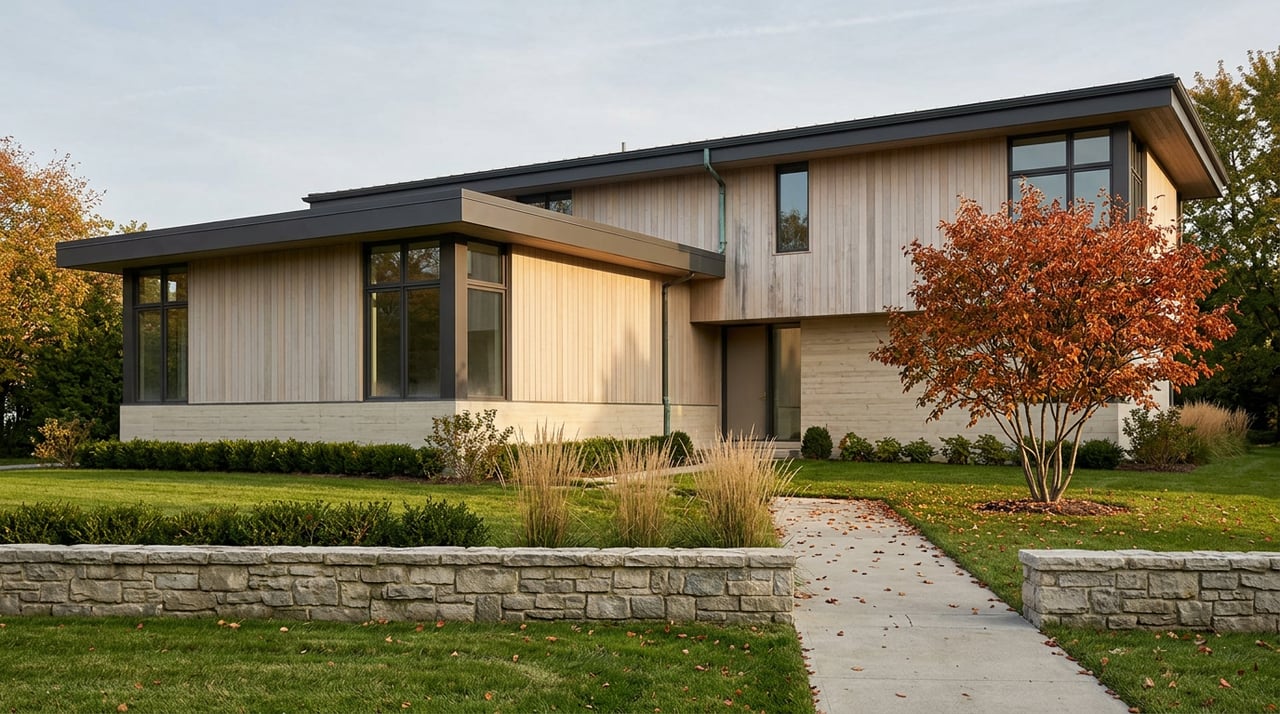
It comes up almost every time an investor client starts looking at Oakville. They've done the math on a waterfront condo near Bronte Harbour or a detached home in Glen Abbey, the mortgage carrying cost pencils out against projected nightly rates, and then they ask the question that changes the whole plan: can I just buy this and list it on Airbnb?
The short answer is no, not the way most people picture it. And the more useful answer is that the reason why says a lot about how Oakville treats short-term rentals differently than Toronto or Mississauga, even though all three towns start from the same rule on paper.
The Rule That Looks Identical Until You Read the Fine Print
Toronto, Mississauga, and Oakville all require that a short-term rental operate out of the host's principal residence. That single requirement quietly closes off the model most people assume exists: buy a second property, furnish it, list it, collect nightly income. Under Toronto's Municipal Code Chapter 547, a host may only register the one home where they actually live, and the city defines that residence by the address on your driver's licence, tax filings, and utility bills. Mississauga's Short-Term Rental Accommodation Licensing By-law 0289-2020 uses the same principal-residence backbone. Oakville's Short-Term Accommodation By-law does too.
So the investment-property Airbnb, the version where you never sleep in the unit yourself, isn't a workaround available in a neighboring city. It's simply not permitted in any of the three.
Here's how the mechanics compare once you get past that shared starting point:
| Toronto | Mississauga | Oakville | |
|---|---|---|---|
| Short-term rental defined as | 28 consecutive days or fewer | 30 consecutive days or fewer | 28 consecutive days or fewer |
| Annual licence or registration fee | $390 (2026 renewal) | $283 | $282 (2025 renewal) |
| Entire-home night cap | 180 nights/year | 180 nights/year | Governed by principal-residence test rather than a night count |
| Extra requirements | Registration number displayed on every listing | $2 million liability insurance naming the city as additional insured, criminal record check | $2 million liability insurance, criminal record check, ESA and HVAC inspection reports |
| Municipal Accommodation Tax | 6% (reverted from a temporary 8.5% rate on August 1, 2026) | Charged locally, confirm current rate with the city | 4% |
That table tells you the fees are roughly comparable. What it doesn't tell you, and what actually matters if you're deciding where to put capital, is how differently each town treats the principal-residence test itself and how hard each one enforces it.
Oakville's Version of the Test Is Harder to Fake
Toronto proves principal residence through paperwork: the address on your ID, your tax filings, your utility bills. Oakville uses a time-based test instead. To qualify, you must actually live in the property for at least 183 days a year, more than half the calendar. That's a materially harder bar to clear if your real intent is to rent the place out while you live somewhere else most of the time, and it's much easier for the town to challenge if your utility usage, parking patterns, or neighbor complaints suggest you're rarely there.
And Oakville is actually checking. The town's licence fee has climbed from $237 when the bylaw took effect in 2018 to $282 as of last year's renewal cycle, and enforcement has grown alongside it. Oakville received a $897,000 federal grant to hire two municipal standards investigators and a supervisor specifically to chase down unlicensed short-term rentals over a two-year enforcement push. The scale of what they're chasing is small by GTA standards: the town issued only 50 operator licences in 2023 and 54 in 2024, against 81 cumulative bylaw charges since 2019, with fines typically running $300 to $500 per violation. Compare that to Toronto, where hosts online frequently describe a more relaxed practical enforcement environment despite having similar rules on the books.
The takeaway for an investor isn't that Oakville is impossible. It's that the town has both the tighter residency test and the newer appetite to enforce it, which raises the practical risk of trying to stretch the definition of principal residence here more than it would in a neighboring market.
What Investors Are Actually Doing Instead
Because the licensed short-term path in Oakville requires you to genuinely live in the unit more than half the year, some investors have shifted the entire model rather than fight the rule. Instead of nightly bookings, they're furnishing properties for stays of 30 days or longer, often called executive rentals. A 30-plus-day stay falls outside the short-term accommodation definition entirely, which means no STA licence, no 4% Municipal Accommodation Tax, and no 183-day residency test to satisfy. This approach has picked up in neighborhoods like Glen Abbey and West Oak Trails, where relocating professionals and corporate transfers create steady demand for a furnished month-plus stay without needing hotel-style turnover.
It's a different income profile than a licensed nightly rental. You give up the premium nightly rate that a well-located Airbnb near the lake can command on a summer weekend, and you trade it for lower turnover costs, no insurance rider specific to short-term hosting, and none of the licensing paperwork. For an investor who wants rental income without becoming a compliance project, it's often the more realistic play in this town.
The Condo Board Problem Nobody Budgets For
If the property you're eyeing is a condo, especially one of the newer buildings near Bronte Harbour or in Old Oakville, there's a second gate to clear that has nothing to do with the town at all. Condo corporations can prohibit short-term rentals through their own declarations, and many waterfront buildings in that stretch of Oakville do exactly that, banning stays under 30 days regardless of whether you'd otherwise qualify for a town licence. A condo board's declaration overrides municipal permission. You can hold a valid STA licence and still be in breach of your own building's rules.
This is the kind of detail that only shows up when someone actually pulls the status certificate and reads the declaration before writing an offer, which is exactly the point at which it should surface, not after closing.
The Tax Consequence If You Skip the Licence Anyway
Anyone tempted to skip the licensing hassle should weigh one more piece of friction first. Since 2024, the Canada Revenue Agency denies income tax deductions, including mortgage interest, utilities, and maintenance costs, for short-term rental income earned in violation of local licensing or registration requirements. That rule is fully in force for 2025 and 2026 filings. An unlicensed rental doesn't just carry bylaw fine risk. It can mean losing the deductions that make the investment math work in the first place.
A Few Questions We Get Before an Offer Goes In
Can I have a family member live in the property to satisfy the residency test while I collect the rental income? The 183-day test is tied to the licensed operator, not just any occupant. If you're not the one living there, you're not the one who can hold the licence, and someone else running the listing under your ownership creates its own compliance questions.
Does buying in Mississauga instead of Oakville solve the problem? Not really. Mississauga uses the same principal-residence foundation, just with a 30-day cutoff instead of 28 and its own licence and insurance requirements. The core limitation travels with you.
What if my condo board allows short-term rentals but I'd rather not deal with the town's licensing process? That's exactly the situation where a 30-plus-day executive rental structure tends to make sense, since it sits outside the short-term accommodation definition in every one of these towns.
If you're weighing an Oakville, Mississauga, or Toronto property specifically for its rental income potential, it's worth modeling both the licensed short-term path and the executive-rental alternative before you commit to a purchase price. Nancy Kohli Haté works with investors across the GTA to run that comparison against a specific property before an offer goes in. Request a complimentary home valuation to start the conversation.